
205.588.0699
Birmingham, AL
205.588.0699
Birmingham, AL

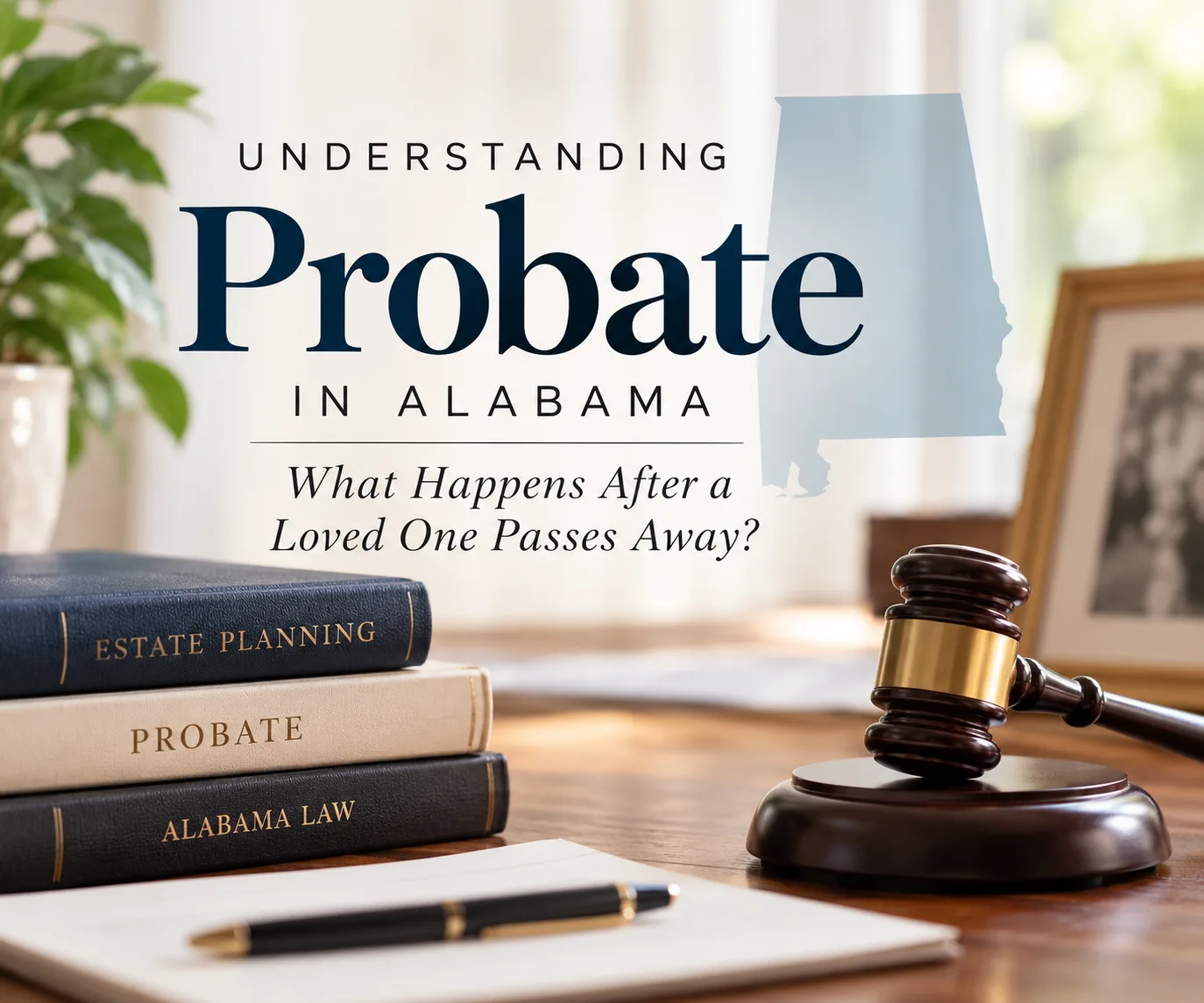
Understanding Probate in Alabama: A Guide to the Alabama Probate Process

Share on Facebook
Share on X
Share on LinkedIn

Losing a loved one is difficult enough without the added stress of navigating legal matters. When someone passes away, family members are often left wondering what happens to their loved one’s property, outstanding debts, and financial affairs.

In Alabama, these matters are often handled through a legal process known as probate. Whether you have been named as the executor of a will, appointed as a personal representative, or are a beneficiary of an estate, understanding the Alabama probate process can help you protect your rights and avoid unnecessary complications.

Below, we answer some of the most common questions about probate and estate administration in Alabama.

What Is Probate in Alabama?

Probate is the legal process of administering a deceased person’s estate. The process generally involves identifying and managing estate assets, resolving valid debts and creditor claims, and distributing the remaining property to beneficiaries or heirs.

In Alabama, probate proceedings are generally handled by the probate court in the county where the deceased person resided.

The probate process helps ensure that the estate is administered according to Alabama law and, when applicable, the deceased person’s valid will.

Is Probate Required in Alabama?

One of the most common questions families ask is whether probate is always necessary after someone dies.

Not every estate requires formal probate administration in Alabama.

Whether probate is necessary depends on several factors, including:

  • Whether the deceased person had a valid will.
  • The types and value of assets owned at death.
  • How bank accounts, real estate, and other property were titled.
  • Whether assets have designated beneficiaries.
  • Whether the estate qualifies for a simplified administration procedure.

For example, certain jointly owned property and accounts with designated beneficiaries may pass directly to surviving owners or beneficiaries without going through probate.

However, when assets are titled solely in the deceased person’s name, probate may be necessary to transfer ownership or properly administer the estate.

How Does the Probate Process Work in Alabama?

Although every estate is different, the Alabama probate process generally involves four primary steps.

1. Opening the Probate Estate

The probate process typically begins when a petition is filed with the appropriate Alabama probate court.

If the deceased person left a valid will, the court may admit the will to probate and appoint an executor. If the person died without a will, the court may appoint an administrator to manage the estate.

The executor or administrator, commonly referred to as the personal representative, is responsible for administering the estate in accordance with Alabama law.

2. Identifying and Managing Estate Assets

Once appointed, the personal representative must identify, gather, and manage the deceased person’s estate assets.

These assets may include real estate, bank accounts, vehicles, investments, and personal property.

The personal representative also has legal responsibilities to protect estate assets and act in the best interests of the estate and those entitled to its administration.

3. Addressing Debts and Creditor Claims Against the Estate

An important part of probate administration involves identifying and addressing outstanding debts.

Under Alabama law, creditors may file claims against a deceased person’s estate seeking payment of money allegedly owed.

However, the filing of a creditor’s claim does not automatically mean the debt is valid or must be paid.

A personal representative may dispute creditor claims that are inaccurate, unsupported, untimely, or otherwise legally unenforceable.

When a creditor’s claim is contested, litigation may be necessary to determine whether the estate is legally responsible for the alleged debt.

4. Distributing Assets to Beneficiaries and Heirs

After the estate’s valid debts, expenses, and legal obligations have been addressed, the remaining assets may be distributed.

If the deceased person left a valid will, property is generally distributed according to the terms of that will.

If there is no valid will, Alabama’s intestate succession laws determine who is entitled to inherit the estate.

How Long Does Probate Take in Alabama?

The length of the probate process varies depending on the size and complexity of the estate.

Under Alabama law, ordinary estate administration generally cannot be finally settled until at least six months after the issuance of letters testamentary or letters of administration, subject to applicable exceptions.

However, probate in Alabama often takes longer than six months, particularly when an estate involves:

  • Disputed creditor claims.
  • Challenges to the validity of a will.
  • Disagreements among heirs or beneficiaries.
  • Complex assets or real estate.
  • Litigation involving the estate.

Proper estate administration and timely resolution of legal disputes can help reduce unnecessary delays.

Questions About Probate in Alabama? Contact Beckum Law.

Whether you have been appointed as a personal representative, are involved in a dispute over an estate, or have questions about a creditor’s claim, understanding Alabama probate law is an important first step.

Contact Beckum Law to discuss your Alabama probate matter and learn more about your legal options.

Understanding Probate in Alabama: A Guide to the Alabama Probate Process

Losing a loved one is difficult enough without the added stress of navigating legal matters. When someone passes away, family members are often left wondering what happens to their loved one’s property, outstanding debts, and financial affairs.

In Alabama, these matters are often handled through a legal process known as probate. Whether you have been named as the executor of a will, appointed as a personal representative, or are a beneficiary of an estate, understanding the Alabama probate process can help you protect your rights and avoid unnecessary complications.

Below, we answer some of the most common questions about probate and estate administration in Alabama.

What Is Probate in Alabama?

Probate is the legal process of administering a deceased person’s estate. The process generally involves identifying and managing estate assets, resolving valid debts and creditor claims, and distributing the remaining property to beneficiaries or heirs.

In Alabama, probate proceedings are generally handled by the probate court in the county where the deceased person resided.

The probate process helps ensure that the estate is administered according to Alabama law and, when applicable, the deceased person’s valid will.

Is Probate Required in Alabama?

One of the most common questions families ask is whether probate is always necessary after someone dies.

Not every estate requires formal probate administration in Alabama.

Whether probate is necessary depends on several factors, including:

  • Whether the deceased person had a valid will.
  • The types and value of assets owned at death.
  • How bank accounts, real estate, and other property were titled.
  • Whether assets have designated beneficiaries.
  • Whether the estate qualifies for a simplified administration procedure.

For example, certain jointly owned property and accounts with designated beneficiaries may pass directly to surviving owners or beneficiaries without going through probate.

However, when assets are titled solely in the deceased person’s name, probate may be necessary to transfer ownership or properly administer the estate.

How Does the Probate Process Work in Alabama?

Although every estate is different, the Alabama probate process generally involves four primary steps.

1. Opening the Probate Estate

The probate process typically begins when a petition is filed with the appropriate Alabama probate court.

If the deceased person left a valid will, the court may admit the will to probate and appoint an executor. If the person died without a will, the court may appoint an administrator to manage the estate.

The executor or administrator, commonly referred to as the personal representative, is responsible for administering the estate in accordance with Alabama law.

2. Identifying and Managing Estate Assets

Once appointed, the personal representative must identify, gather, and manage the deceased person’s estate assets.

These assets may include real estate, bank accounts, vehicles, investments, and personal property.

The personal representative also has legal responsibilities to protect estate assets and act in the best interests of the estate and those entitled to its administration.

3. Addressing Debts and Creditor Claims Against the Estate

An important part of probate administration involves identifying and addressing outstanding debts.

Under Alabama law, creditors may file claims against a deceased person’s estate seeking payment of money allegedly owed.

However, the filing of a creditor’s claim does not automatically mean the debt is valid or must be paid.

A personal representative may dispute creditor claims that are inaccurate, unsupported, untimely, or otherwise legally unenforceable.

When a creditor’s claim is contested, litigation may be necessary to determine whether the estate is legally responsible for the alleged debt.

4. Distributing Assets to Beneficiaries and Heirs

After the estate’s valid debts, expenses, and legal obligations have been addressed, the remaining assets may be distributed.

If the deceased person left a valid will, property is generally distributed according to the terms of that will.

If there is no valid will, Alabama’s intestate succession laws determine who is entitled to inherit the estate.

How Long Does Probate Take in Alabama?

The length of the probate process varies depending on the size and complexity of the estate.

Under Alabama law, ordinary estate administration generally cannot be finally settled until at least six months after the issuance of letters testamentary or letters of administration, subject to applicable exceptions.

However, probate in Alabama often takes longer than six months, particularly when an estate involves:

  • Disputed creditor claims.
  • Challenges to the validity of a will.
  • Disagreements among heirs or beneficiaries.
  • Complex assets or real estate.
  • Litigation involving the estate.

Proper estate administration and timely resolution of legal disputes can help reduce unnecessary delays.

Questions About Probate in Alabama? Contact Beckum Law.

Whether you have been appointed as a personal representative, are involved in a dispute over an estate, or have questions about a creditor’s claim, understanding Alabama probate law is an important first step.

Contact Beckum Law to discuss your Alabama probate matter and learn more about your legal options.

Attorney Advertising
No representation is made that the quality of legal services to be performed is greater than the quality of legal services to be performed by other lawyers.

Website developed in accordance with Web Content Accessibility Guidelines 2.2.
If you encounter any issues while using this site, please contact us: 205.588.0699
205.588.0699
Birmingham, AL
205.588.0699
Birmingham, AL